
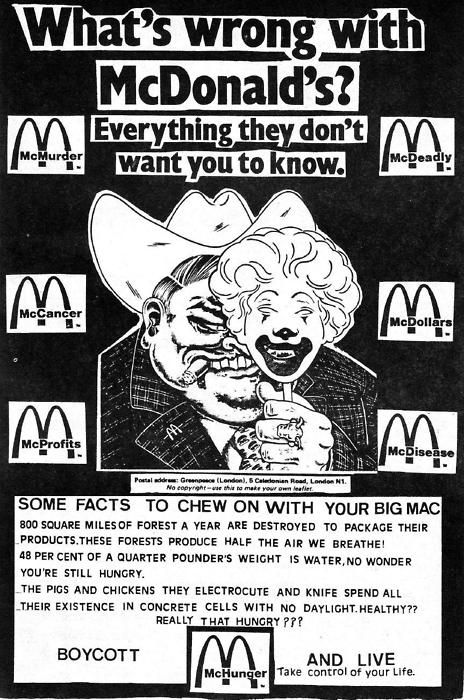
I’ve been listening to the excellent BBC podcast The People vs McDonald’s presented by Mark Steele, retelling the story of the McLibel case. In the 1990s, the McDonald’s Corporation sued two members of London Greenpeace over claims made in a leaflet they were handing out to the public in a London street.
Before the trial, leaflets were being given out on a north London street, to a couple of hundred people on the average Saturday afternoon. After McDonald’s incredible own goal, which became the longest legal trial in British legal history, costing McDonald’s millions of dollars, the health, and environmental issues associated with fast food came to worldwide attention – great work McDonald’s!
Fast forward to 2021: The children at the next table in the Food Court already have the toys they got with their Happy Meals, so, disappointed, they leave them sitting in a pile of half-eaten chips and waste packing.
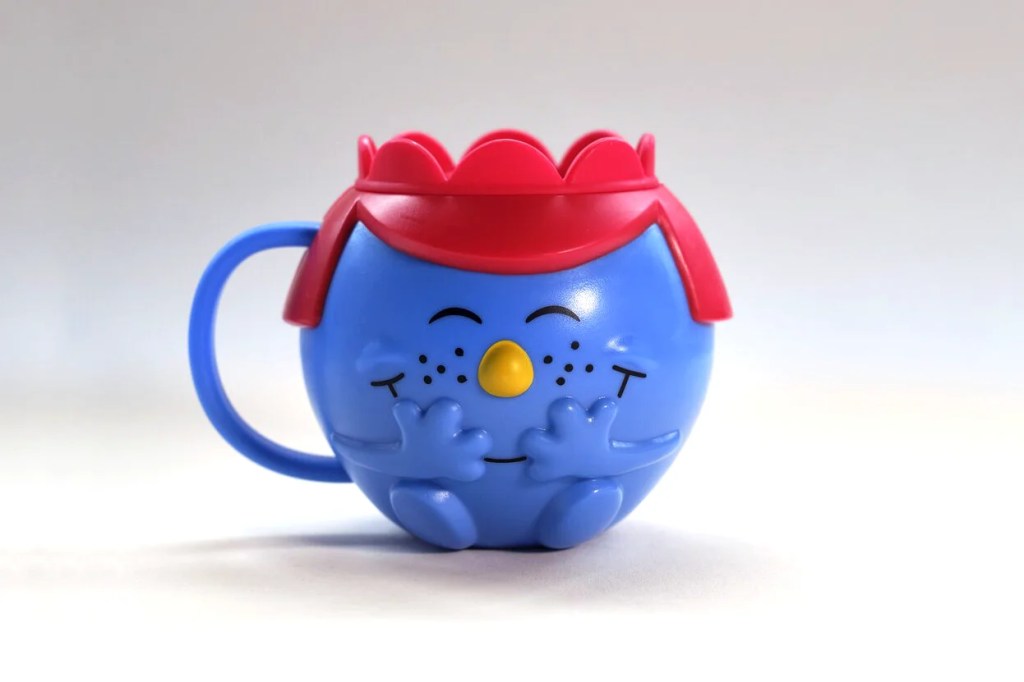
They’re undoubtedly cute in their own way. However, Little Miss Giggles here is 63 grams of non-recyclable plastic. Mr Tickle is a little lighter at 58 grams. McDonald’s own figures state that between 2018 and 2022 (a period that included the global pandemic, when many restaurants were closed), worldwide sales of Happy Meals exceeded 5.7 billion. An average of 1.14 billion plastic toys a year.
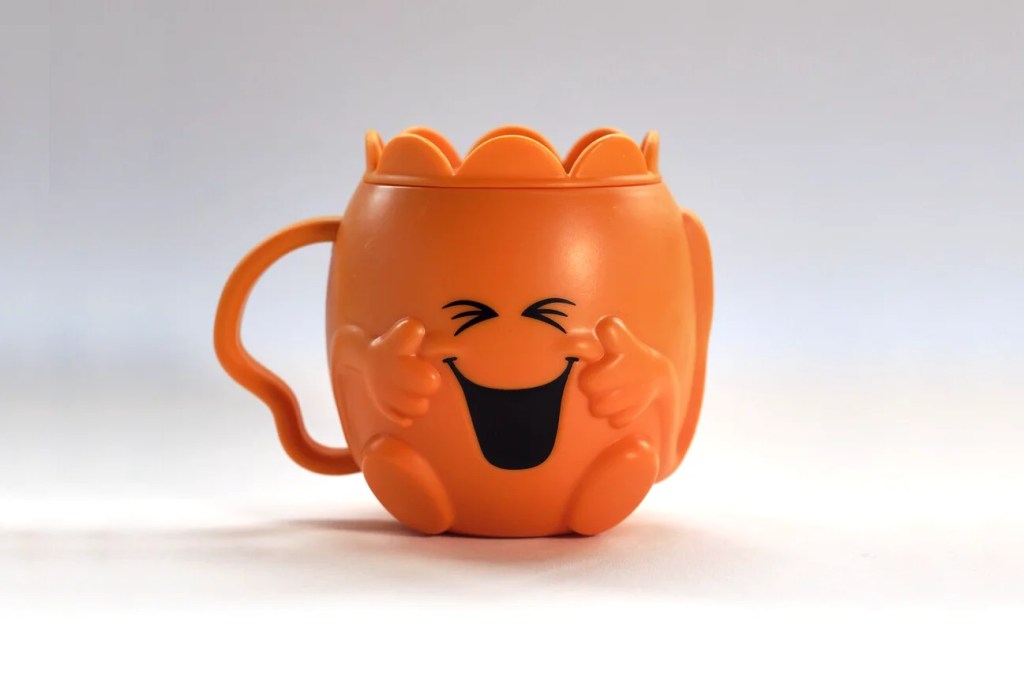
Not all Happy Meal toys are equal, but if they all weighed as much as Little Miss Giggles, that’s 71,190 tonnes of non-recyclable plastic per year. How many of those end up in the bin before they’re a day old? That’s seventy-one thousand, one hundred and ninety tonnes of plastic that will still exist long after those children have passed away. In fact, Little Miss Giggles will likely be indistinguishable from that photo in a thousand years.
Global plastic production increases year on year. In 2023 (the latest date I could find reliable figures), the world produced 413.8 million tonnes of plastic, of which 91.3% was fossil-based (oil basically).
Earlier this year, an article in Nature Magazine stated that a researcher at the University of New Mexico in Albuquerque “estimates that he can isolate about 10 grams of plastics from a donated human brain. That’s about the weight of an unused crayon”. There is nowhere they have not reached; microplastics have recently been found in the placentas of premature children..
Could it be time to accept that the world only needs a certain number of plastic toys? I hate to sound like your stressed parent at Christmas, but can’t we just play with the billions of plastic toys we already have?
Stay safe out there. N.
BTW. If you’re interested in the McLibel campaign I’d recommend the documentary mentioned in the podcast made by Franny Armstrong of Spanner Films.
 Broken Biscuits
Leave a comment