Tag: study

  • Documentary Photography Self-Study blog #2

    This is the second blog post in a series about self-study in general and, in particular, furthering my education in Photojournalism and Documentary Photography.

    Note: I’m adding these three posts from my old blog, they add context to my current studying methods and my prove helpful for others self-studying. My process of studying changed as I figured out what works best for me. The process I outline here isn’t the way I’m studying now.

    This month, nothing highlighted the cavernous gap in my knowledge of photojournalism quite as much as my almost complete ignorance of the work of Philip Jones Griffiths, but more of that later.

    The Goal

    I’m basing my study around the outline for the London College of Communication (LCC) BA in Photojournalism and Documentary Photography. My intention is to apply for the course when time and money permit (which, in this context, are the same thing). I’m adding relevant resources to that blog post as I find them.

    This Month

    I didn’t achieve as much as I’d hoped – although I do need to keep reminding myself that I’m not writing to a deadline, there isn’t a tutor waiting, red pen in hand. I think some of that pressure comes from the fact that I’m not working to a deadline. I am conscious that nothing prevents me from just deciding not to do this any longer. I guess I’m trying to prove something and stop myself from taking that easy option.

    Unit 2: Practical Documentary Photography & Photojournalism

    “This unit will introduce you to the skills and knowledge required to identify, research, shoot and edit a series of photographic images within particular genres of documentary and photojournalistic image-making.”

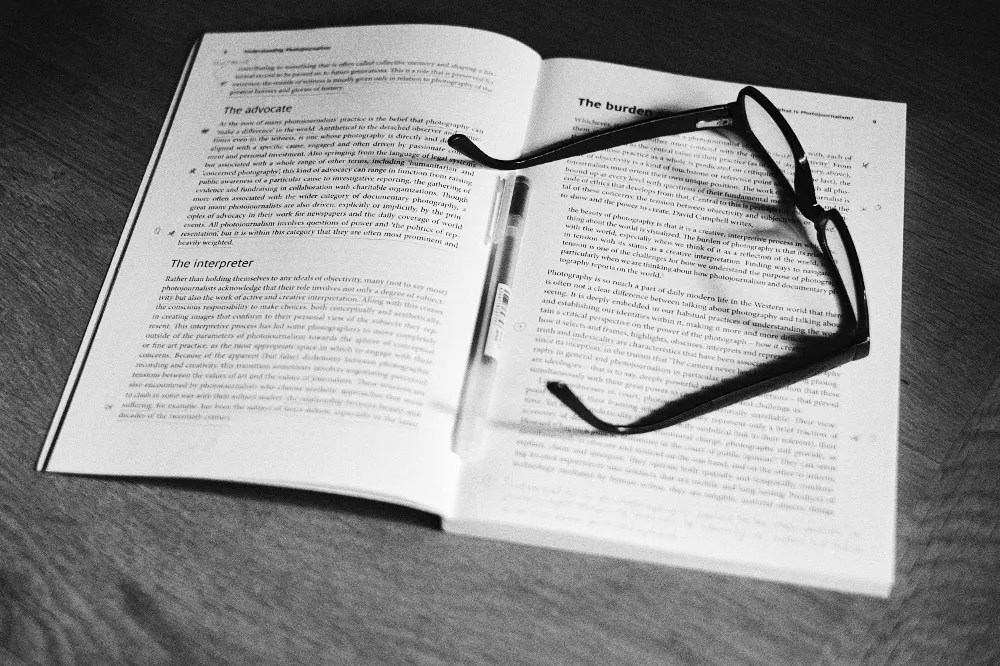
    Book: Understanding Photojournalism, Chapter 1 – What is Photojournalism

    I continued reading around the themes raised, attempting to answer, ‘What is Photojournalism’, which isn’t as obvious a question to answer as you may first think.
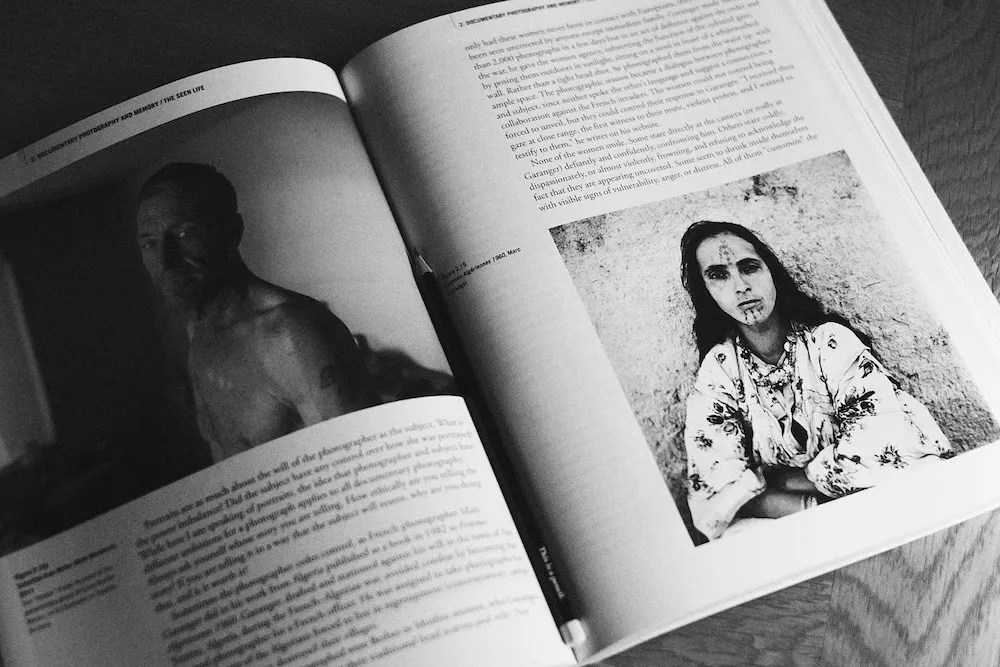
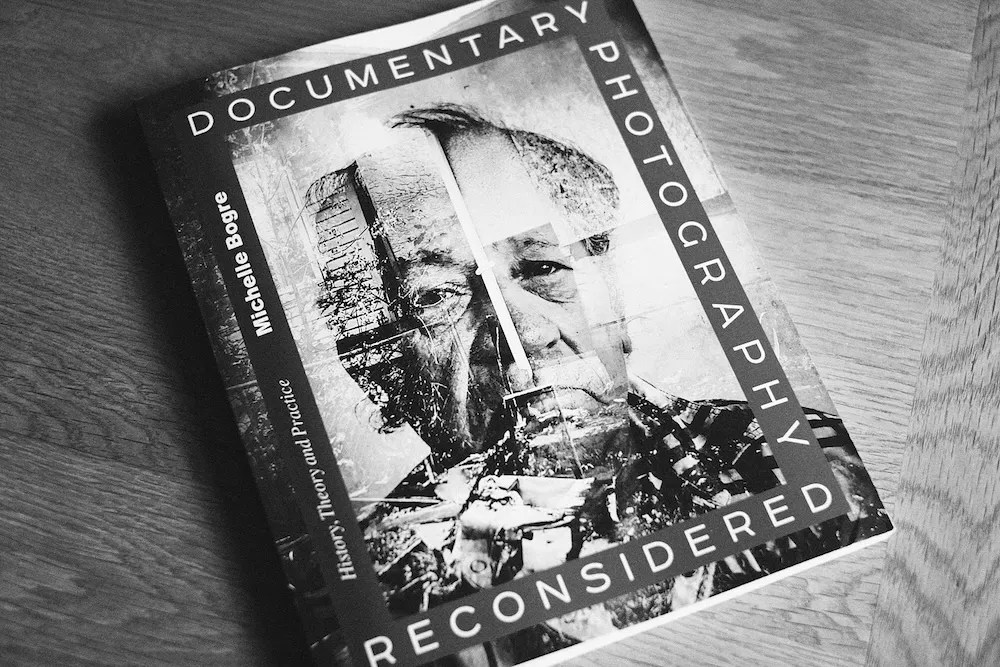
    Book: Documentary Photography Reconsidered: History, Theory and Practice by Michelle Bogre

    The plan is to work through the chapters relevant to the Unit. Unfortunately, I didn’t have a copy of the book when I needed it (I’ve since received a copy for my birthday), so I’ll return to that once I’ve finished Unit 3.

    Book: Witness in Our Time: Working Lives of Documentary Photographers

    I explored the work of several of the featured photographers, but I was particularly fascinated by the life of the incredible Hansel Mieth. She seemed like such a ballsy woman, someone I’d loved to have met. There’s a great documentary on Vimeo if you’re interested.

    Unit 3: Histories & Theories of Photojournalism & Documentary Photography

    “This unit introduces you to the key historical and social issues surrounding photojournalism and documentary photography from their earliest stages to the present day.”

    Book: Understanding Photojournalism, Chapter 2 – History and Development of Photojournalism

    There is so much to explore in the history of photojournalism; a single chapter cannot give more than the broadest overview. Several times, I found myself disappearing down the inevitable rabbit holes. For a newspaper junkie like me, it was intriguing to see the first photograph ever published in a newspaper—the New York ‘Daily Graphic’, in 1880. I also found myself counting cannonballs in the Valley of the Shadow of Death, and no, I’m still not sure which image came first.

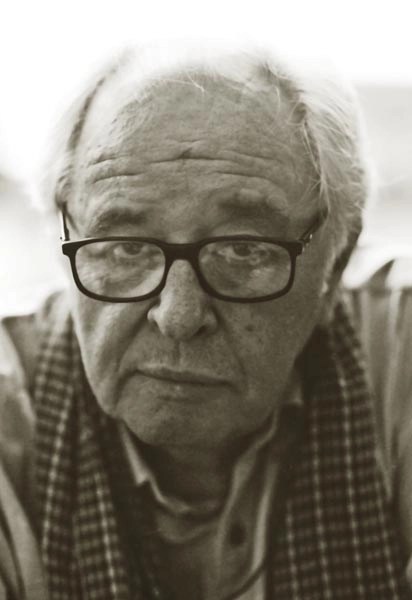
    I’ve made a note to delve deeper into the work of Jacob Riis and Lewis Hine, but the greatest inspiration most certainly came from the work of Philip Jones Griffiths.
    One thing I’ve learnt this month

    I’m genuinely ashamed to say I didn’t know the work of Philip Jones Griffiths whatsoever.

    Philip was a Welsh-born photojournalist and pacifist principally known for his work in Vietnam during the war; he also worked in the UK and Cambodia.

    His best-known book, Vietnam Inc., is widely regarded as one of the most honest portrayals of the Vietnam War. Eugene Richards describes it as “one of the books of the 20th Century.”

    There are two excellent documentaries on Vimeo about Jones Griffiths. One made by his long-term partner Donna Ferrato, shot days before he died (above) and the other (below) by the Philip Jones Griffiths Foundation.

    After his death, John Pilger wrote:

    “I never met a foreigner who cared as wisely for the Vietnamese, or about ordinary people everywhere under the heel of great power, as Philip Jones Griffiths. He was the greatest photographer and one of the finest journalists of my lifetime, and a humanitarian to match. His photographs of ordinary people, from his beloved Wales to Vietnam and the shadows of Cambodia, make you realise who the true heroes are. He was one of them.”

    Throughout my studies, I have continued updating my list of Documentary Photography: Courses, Documentaries & Talks, which may be helpful.

    Until next time. If you have any questions, comments, or suggestions, get in touch.
  • Documentary Photography Self-Study Blog #1

    This is the first blog post in a series about self-study in general and, in particular, furthering my education in Photojournalism and Documentary Photography.

    Note: My process of studying changed as I figured out what works best for me. The process I outline here isn’t the way I’m studying now.

    At some point in mid-2021, I was feeling a little discouraged by not being able to work on the projects I’d been planning. So, I turned my attention to improving my knowledge about the field of documentary storytelling in general.

    I know the structure of crafting a photo story, and I think my ethics are well-tuned; maybe we all do? Are my instincts correct? Is the way I tackle a project the best approach? These are some of the questions I hope to answer. I’m also interested in learning more about the history of photojournalism.

    I’ve been working on projects for a few years; I’ve attended some excellent short courses, including the highly recommended Missouri Photo Workshop. But I’ve never undertaken any long-term formal education in the subject – a situation I’m determined to remedy at some point.

    So, self-education, how easy and valuable is it in reality? I’m going to document my process for two reasons. Hopefully, it will prove helpful to others – even if it becomes a guide on how not to proceed.

    The Start

    It started a little haphazardly. I bought a few books, some good, some not so much. I watched Matt Black: The Documentary Commitment, which I would recommend, more of that to come. In the process, I have created a list of resources that I’ve shared here, which might be helpful. All good as far as it goes, but I needed some structure.

    Then, something led me to watch the recording of last year’s online open day for LCC’s Photojournalism and Documentary Photography BA. It’s a well-regarded course and one I’d like to apply to at some point. I realised that on the LCC website is a detailed outline of the BA course. Could this be the guide I’d been looking for!

    I have broken down the outline and started adding resources that seem to fit the various units of the course. You’re joining me almost at the beginning of this journey. I intend to add to the outline as I discover different resources.

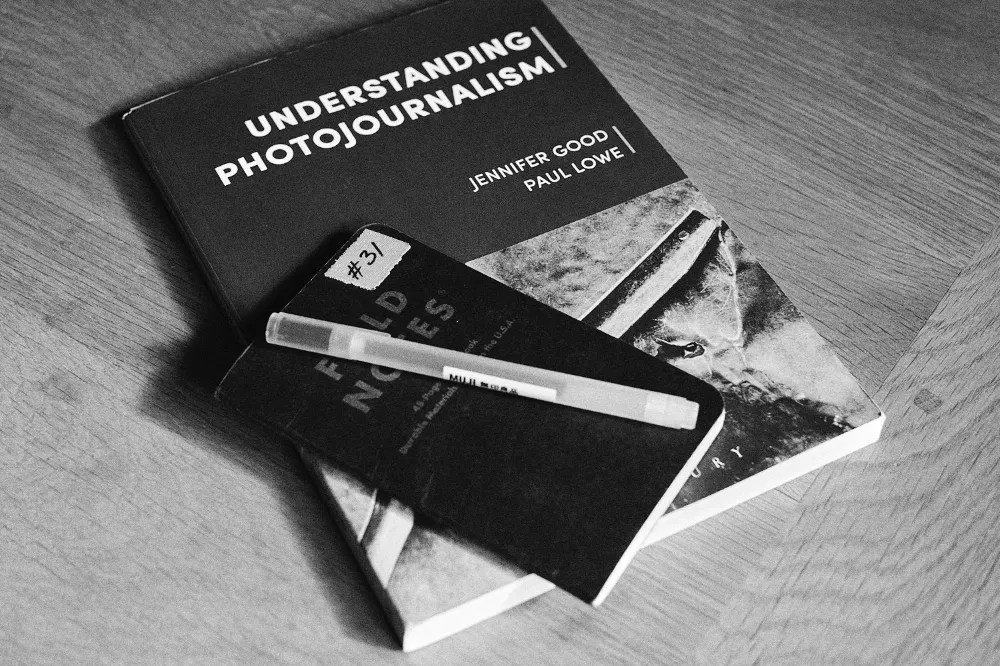
    Jennifer Good, the LCC BA Course Leader, and Paul Lowe, a tutor and highly respected photojournalist, have published ‘Understanding Photojournalism‘. The book chapters closely mirror the BA course units – I’m taking this as my starting point.

    I’m going to blog – maybe monthly – so you can see how I’m getting on. (Plus, writing the blog will give me an excuse to not study when I need one!)

    A few caveats I feel obliged to include:

    • I’ve only been working on it for a few weeks. As I go on, I’ll probably find that some of the resources I include would be better off as part of a different ‘unit’.
    • Working as I am is no substitute for guidance from a qualified tutor. If I had the money/time, I’d be applying for the BA now.
    • I’m not a tutor; I am literally making this up as I go along.

    Method

    It’s been a long time since I’ve undergone any formal education, and without a tutor on call, I wasn’t sure of the best way to proceed.

    I started writing longhand in a notebook. Although I enjoyed the process of writing my notes, and apparently, we absorb more information if we write notes by hand, I soon realised I should have started digitally. Particularly as I’m still discovering how best to do this, the convenience of being able to go back and easily edit is invaluable. So last week, I took a few days to type up the notes I’d made so far. I’m glad I made that decision early in the process.

    I’ve fallen into working by reading each chapter and underlining relevant sections in the book as I go. Then I reread it and typed up my notes. I’m using Evernote, although I’m sure any note-taking app will work. Evernote allows me to insert images, PDFs and even YouTube videos. There’s a free version of Evernote that does everything you need.


    Progress so far

    I started reading the book before finding the outline, so I didn’t have a structure set up. Although I’d read through a few chapters, as I’m not working to a timetable, I’ve gone back to the beginning, writing more detailed notes.

    Hopefully, I’ll still be as keen this time next month so I’ll let you know how it goes. If you have any questions, comments or suggestions, get in touch.


    One thing I’ve learnt this month

    I’ve always been a fan of David Hockney’s joiners, always imagining they were nothing more than wonderful collage images. I hadn’t realised Hockney was addressing the ‘problem’, as he saw it, of the passing of time in a photograph.

    When you photograph a scene, you capture the whole area of the image at the exact moment (within fractions of a second). When we look at a scene, our eyes move around it, viewing different areas at different times. Hockney’s ‘joiners’ answer that problem; he talks about it in this video.

    Throughout my studies, I have continued updating my list of Documentary Photography: Courses, Documentaries & Talks, which may be helpful.

  • Documentary Photography: Courses, Documentaries & Talks

    updated: 11 April 2026

    I started this list of online courses, documentaries, books, and talks while studying documentary photography and photojournalism during the UK’s coronavirus lockdown.

    Since then, thanks to the contributions of others, it has continued to grow. My interests are documentary photography, photojournalism, and investigative journalism, so this list reflects that; however, many of the organisations offer courses in related areas that may be of interest. Let me know about the ones I’ve missed.

    Courses, Documentaries, Books, Talks & More

    There are a vast range of tutorials on YouTube, CreativeLive, Domestika, Skillshare and Udemy. Some are excellent; many are not. I don’t intend to cover those here; the quality is too inconsistent, and it would be a full-time job. I will list those created by recognised educational organisations, established practitioners or established companies in the field, such as VII Agency, Magnum, Nikon, etc.

    Listing here doesn’t indicate I’ve taken the course; in the vast majority of the cases, I haven’t. This is purely a resource that may be useful.

    The documentaries are available on a wide range of platforms, from the BBC and DVDs to Netflix and YouTube. I’m adding streaming links as I come across them.

    The sections include:

    • Articles and Blogs
    • Courses and Classes – Commercial
    • Courses and Classes – Educational/non-profit
    • Courses and Classes – Free
    • Documentaries
    • Mentoring
    • Reading List
    • Talks, Interviews, Podcasts, and Video Guides
    • Useful Resources (how-tos)

    Articles and Blogs

    Blind Magazine has several excellent articles which may be useful.

    Field of View: Patrick Witty’s substack.
    The former Photo Editor at The New York Times and International Picture Editor at TIME, amongst other positions, deep-dives into iconic images from history. I guarantee you’ll learn something.

    New York photojournalist Michael Brochstein has a range of interesting articles and videos, all aimed at photojournalists. These include Organizing 100,000+ Images Per Year Made Easy’(Digital asset management) and Personal Security for Photographers & Their Equipment.

    VII Insider Blog has a selection of high-quality articles from the VII Foundation.

    Courses & Classes: Commercial

    • Duckrabbit
      An award-winning film production and training company. They hold a mini-documentary workshop, which I have my eye on. Training was suspended for COVID, but if you’re interested, add your name to their mailing list – maybe I’ll see you there.
    • Eyes in Progress
      Offers a range of masterclasses and mentoring. Tutors include Alec Soth, Anders Petersen, Mark Power and Todd Hido; this really is the A to Z of top-flight contemporary photography.
    • International Centre of Photography
      The highly respected, NYC based, ICP has a range of online short courses in different aspects of documentary photography.
    • Leica Akademie
      Leica’s training academy offers a range of free and paid talks by established photographers (change country via the dropdown at the bottom of the page).
    • Learning with Experts: Photo Journalism
      An online course taught by award-winning Panos Pictures photographer Stuart Freedman. This course has two varieties: a Peer Option, where you learn in an online classroom with other photographers, or the Expert Option, where you get personal feedback from Stuart.
    • Lewis Bush
      The London College of Communication’s MA Photojournalism and Documentary Photography Course leader teaches classes online and from his own studio in South London. Recommended
    • London Institute of Photography (LIoP)
      Offers a range of online and in-person courses based in London’s Brick Lane. Online courses include: Complete Foundation Photography Course, Beginners Photography Course, Intermediate Photography Course, Lightroom, Photoshop and Photography Careers
    • Masterclass has a range of classes from well-known industry experts for an annual fee. Of interest may be:
      • Annie Leibovitz – portrait photography
      • Ken Burns – documentary filmmaking
      • Bob Woodward – investigative journalism
    • Masters of Photography
      Classes from Albert Watson, Joel Meyerowitz and Steve McCurry – these are priced per class.
    • Magnum The world-famous agency offers online classes from various Magnum photographers. It also offers (very expensive) mentoring with the likes of Matt Black and Susan Meiselas.
      • Alec Soth: Photographic Storytelling
      • The Art of Street Photography, with contributions from Bruce Gilden, Martin Parr, Susan Meiselas, Richard Kalvar, Carolyn Drake, Peter van Agtmael and Mark Power.
      • Bieke Depoorter: Chance Encounters
      • Matt Black: The Documentary Commitment – I’ve watched this twice and I’d highly recommend it. Matt talks very personally about his approach, ethics, and how he researches and organises his projects. Recommended
    • MediaStorm
      An award-winning film production and interactive design studio. They have a range of online and in-person courses on subjects including video and stills documentary, production workflow and a week-long storytelling workshop.
    • Paul Hill and Maria Falconer
      The photographers run a range of workshops, both online and in-person. They also offer 1-2-1 tutoring and mentorship. Paul is the more documentary-focused, being a former photojournalist, having worked for the Birmingham Post & Mail, The Guardian, The Observer, and the BBC, amongst others.
    • Photography Ethics Centre
      Two courses are available: the Photojournalism Ethics Series, this is a paid three-part online course, and a shorter free course is listed below. Also, check out the three-part public lecture series on Ethical Literacy on the VII Insider site facilitated by Savannah Dodd, founder and director of the Photography Ethics Centre.

    Courses & Classes: Educational/non-profit

    • The Eddie Adams Workshop (USA).
      The Eddie Adams Workshop is a merit-based, four-day photojournalism seminar held in upstate New York every Columbus Day weekend. It is tuition-free, and students are chosen based on the merit of their pictures.
    • Falmouth Flexible from Falmouth University (UK)
      • Online Masters in Photography
      • Online Masters in Journalism
      • Online BA(Hons) Photography (Top-Up)
    • Foundry Photo Workshop (USA, location varies).
      Foundry provides opportunities for those from majority world nations and aims to be affordable for those students. It produces a quality workshop that offers real-world experience in reportage, honest feedback from respected professionals, and a genuine community at an accessible cost.
    • The International Center of Photography (NYC, USA). A highly respected institution based in New York City. They offer both full and part-time courses, in-person and online.
      • Documentary Practice and Visual Journalism
      • Visual Storytelling Intensive
      • Documentary Practice: Visual Strategies
      • The Photo Essay: Strategies for Visual Storytelling
    • The Kalish (USA).
      Part of the Rochester Institute of Technology, “The Kalish Workshop is an inspirational and intense five-day experience led by award-winning faculty and staff members who focus on the editing and decision making aspects of visual storytelling.”
    • London College of Communication (London, UK) Part of the University of the Arts London. A highly respected UK university with far too many courses to mention. A few that are particularly relevant:
      • BA (Hons) Photojournalism and Documentary Photography (LCC)
      • MA Photojournalism and Documentary Photography (online and in-person) from the London College of Communication (LCC)
      • Documentary Photography Online Short Course (LCC)
      • Magnum and LCC Intensive Documentary Photography Course (LCC)
    • The Margate School (Margate, UK)
      The Margate School offers a one-year post-graduate course titled The Still & Moving Image. “Using experimentation and exploration to develop your practice, this course is supported by both practical and theoretical sessions within the School, the local environment and wider community.”
    • Missouri Photo Workshop (across Missouri, USA).
      In its 77th year (2025), this annual week-long workshop is organised by the Missouri School of Journalism; the faculty comprises photojournalists, photo editors and photographers. I’ve attended the workshop and would highly recommend it.
    • Mountain Workshops (across Kentucky, USA)
      An annual five-day workshop organised by Western Kentucky University. It comprises five disciplines: photojournalism, video storytelling, picture editing, digital storytelling, and K-12 educators—for a week-long workshop.
    • Prism Workshop, (Chicago, USA).
      The Prism Workshop is a non-profit organisation that aims to offer “education, resources, mentoring, funding, professional development and community to visual journalists from traditionally underrepresented communities including women, people of color, LGBTQ people and people with disabilities.”
    • University of Bolton (UK)
      • BA (Hons) Photojournalism and Documentary Photography
    • University of Gloucestershire (UK)
      • Photojournalism and Documentary Photography (with Foundation) BA (Hons)
      • Photojournalism and Documentary Photography BA (Hons)
    • University of South Wales (UK)
      • BA (Hons) Documentary Photography is a full-time in-person course established by Magnum photographer David Hurn in 1973.
      • MA Documentary Photography, part-time online course
    • University of London, Goldsmiths College (London, UK)
      • MA Photography and Urban Cultures – they say, “the degree encourages creative interplay between practice and theory – you’ll develop your practical photography skills and examine key ideas and debates in the representation and evocation of contemporary city life.”

    Courses & Classes: Free

    Documentaries

    • Alberto Diaz: Chevolution (2008). A documentary about the famous portrait by Cuban photographer Alberto Diaz made of Che Guevara, one of the most recognisable snapshots in photography. Watch free on Plex
    • Alec Soth: Somewhere To Disappear. This isn’t documentary photography as such, but I did find Soth’s approach inspiring. – YouTube
    • Andrea Bruce: Lessons in the Field. Andrea Bruce shares valuable insights about creating compelling narratives, critical thinking, earning trust, perspective, and the importance of fixers to photojournalists’ work. Vimeo Recommended
    • Annie Leibovitz: Life Through a Lens. Internet Archive
    • Ansel Adams: A Documentary Film. DVD from Amazon US
    • Bill Cunningham: New York. Amazon Prime Video UK
    • Bill Jay: Do Not Bend: The Photographic Life of Bill Jay. YouTube
    • Cindy Sherman: Guest of Cindy Sherman (2008). Photographer Cindy Sherman talks about being the master of disguise through her photographic role-playing and delivers an intimate look at her artistic methods. Film website
    • Danny Wilcox Frazier: Driftless: Photographs From Iowa. Documentary photographer Danny Wilcox Frazier captures life in rural Iowa, the land in which he grew up. Vimeo Recommended
    • David Seymour, Gerda Taro, and Robert Capa: The Mexican Suitcase. A 2011 documentary about the over 4000 film negatives created during the Spanish Civil War by David Seymour, Gerda Taro, and Robert Capa. It follows the journey of the photographs from their disappearance at the beginning of World War II to their rediscovery in 2007. Amazon Prime (but not in the UK)
    • Diane Arbus: Masters of Photography. YouTube
    • Don McCullin: McCullin. Don speaks candidly about his three-decade career covering wars and humanitarian disasters on virtually every continent, and the photographs that often defined historic moments. At some points, it’s far from an easy watch. This is not the film to introduce the kids to photojournalism, but that aside, it’s recommended. Amazon Prime Video UK | YouTube
    • Dorothea Lange: An American Odyssey YouTube
    • Edward Weston: The Photographer YouTube
    • Everybody Street: Highlights the lives and work of New York’s iconic street photographers. YouTube
    • Frame by Frame: A 2015 documentary that follows four Afghan photojournalists who face struggles as they report during the ‘photo revolution’ that is occurring in the post-Taliban free press. On Apple TV.
    • Francesca Woodman: The Woodmans (2010) Amazon Prime (but not in the UK) – A peek into the life of Francesca Woodman, a young photographer known for her self-portraits and photos of other women.
    • Garry Winogrand: All Things are Photographable, part of the American Masters series. Free to watch on the Internet Archive.
    • Gregory Crewdson: Brief Encounters. website
    • Harry Gruyaert: Photographer This is the story of 75-year-old Magnum member Harry Gruyaert, whose life is saved by colour. website
    • Helmut Newton: Frames from the Edge Amazon Prime Video UK
    • Henri Cartier-Bresson: The Decisive Moment Vimeo
    • James Balog: Chasing Ice. Environmental photographer James Balog and his Extreme Ice Survey to publicise the effects of climate change. website.
    • James Nachtwey: War Photographer Watch free online
    • Joakim Eskildsen: Nothing Special Joakim Eskildsen is a Danish documentary photographer praised for his work on the Roma people and poverty in the United States. Joakim tells his own story and that of the people around him. website
    • Letizia Battaglia: Shooting the Mafia Kim Longinotto’s 2019 documentary details Letizia Battaglia’s career, documenting the life and crimes of the Mafia in Sicily. Amazon Prime
    • Nan Goldin: All the Beauty and the Bloodshed website Filmmaker Laura Poitras (see Citizenfour) details Nan Goldin’s personal fight to hold the Sackler family accountable for the opioid overdose crisis. Currently showing in the UK on the BBC i-Player. Outside the UK on YouTube/Apple TV etc. Recommended
    • Nan Goldin: I Remember Your Face (2014). Documentary filmmaker Sabine Lidl observes photographer Nan Goldin through interactions with the friends who became her subjects.
    • National Geographic: The Last Roll of Kodachrome YouTube
    • National Geographic: The Photographers
    • National Geographic: Search for the Afghan Girl YouTube
    • Oscar: Portrait of a Photojournalist. A short film about Guatemalan photojournalist Oscar Gutierrez. YouTube
    • Philip Jones Griffiths (The Magnificent One:) The legendary anti-war photographer and author of Viet Name Inc., gives the interview of a lifetime, only 48 hours before he died at his home in London on March 19, 2008. Vimeo
    • Richard Avedon: Darkness and Light. From The American Masters Series (1996). YouTube
    • Robert Frank: Don’t Blink. Film website
    • Ron Galella: Smash His Camera. Infamous paparazzi photographer Ron Galella.
      Apple TV
    • Saul Leiter: In No Great Hurry: 13 Lessons in Life with Saul Leiter. An endearing portrait of an increasingly influential photographer and artist. Film website. Recommended
    • Saul Leiter: Masters of Photography series. YouTube
    • Sebastião Salgado (in conversation with). YouTube
    • Sebastião Salgado: The Salt of the Earth. Amazon Prime or YouTube Movies
    • Shooting the Darkness: An RTE documentary about the local photographers in Northern Ireland who covered ‘the troubles’. – BBC iPlayer and RTE.
    • Simon King: How To Become a Documentary Photographer. A short film featuring British documentary photographer Simon King. YouTube
    • Sirkka-Liisa Konttinen photographs Byker. A BBC Nationwide interview from 1974. YouTube
    • Susan Meiselas, Richard P. Rogers and Alfred Guzzetti. Pictures from a Revolution. Film website
    • Tales by Light. Netflix series. “Photographers and filmmakers travel the world capturing people, places, creatures and cultures from new, previously unseen angles.”
    • The History of Photography. BBC series – watch free onlineRecommended
    • Through a Lens Darkly: Black Photographers and the Emergence of a People. YouTube
    • Tim Hetherington: Which Way is the Front Line from Here? The Life and Time of Tim Hetherington. The film is available on several streaming platforms including Apple + and Prime Video. Tim Heatherington Wikipedia
    • Tish Murtha: Tish is a documentary about the working-class British social documentary photographer Tish Murtha, who captured the impact of Thatcherism on the north of England but could not escape the poverty and inequality she exposed. Film website. Recommended
    • W. Eugene Smith: The Jazz Loft According to W. Eugene Smith. Smith the master of monumental projects exceeds himself in recording 4000 hours of audio tape and took 40,000 photographs in the Jazz Loft between 1957 and 1965. There is a trailer on YouTube that is guaranteed to make you want to watch the whole thing. Recommended
    • William Eggleston: The Colourful Mr Eggleston. YouTube
    • William Klein: The Many Lives of William Klein YouTubeRecommended
    • Vivian Maier: Finding Vivian Maier. website | Amazon Prime Video UK
    • Zana Briski: Born Into Brothels. Documentary photographer Zana Briski journeyed into Calcutta’s underworld to photograph the city’s prostitutes. Watch free online

    Mentoring

    There aren’t many photographers who are so sure of their process and the direction a story should take that they wouldn’t benefit from the objective eye of a colleague. Often, that could be one of your peer groups. But occasionally, the dispassionate view of a more experienced practitioner is needed.

    • Ed Thompson
      Documentary photographer and lecturer, Ed offers online mentoring and training as well as teaching a post-graduate course at The Margate School.
    • Magnum
      The world-famous agency offers (very expensive) mentoring with the likes of Matt Black and Susan Meiselas. For the rest of us, check out their online classes from various Magnum photographers, including one I’ve watched with Matt Black, which I’d recommend.
    • Stuart Freedman
      Documentary photographer and writer Stuart Freedman offers mentoring and coaching. His website has more details.
    • VII Academy
      Offers a two-year mentorship programme for photojournalists who have already started their careers.

    Reading List

    Please avoid buying from Amazon if you can. There are so many great local bookshops that would appreciate your support.

    • For academic articles, try searching the UAL Research Online (University of the Arts, London) – to narrow things down, select the college as ‘London College of Communication’.
    • A recommended reading list for the Technique and Theory in Documentary Photography from Blind Magazine.
    • American Photojournalism: Motivations and Meanings by Claude Cookman.
    • Another Country: British Documentary Photography Since 1945 by Gerry Badger.
    • Basics Creative Photography 02: Context and Narrative by Maria Short. The author is a photographer, writer and lecturer in photography at the University of Brighton. This book has been updated since the edition I own. I haven’t had a chance to see the later edition.
    • The Documentary Impulse by Stuart Franklin is out of print, but used copies are still available online. Franklin explores why we are driven to visually document our experiences and the world around us. He focuses on photography but traces this universal need through art, literature, and science. Recommended by Bojan Fürst.
    • Documentary Photography Reconsidered: History, Theory and Practice by Michelle Bogre is a very useful textbook in its own right. The book-specific site also has a number of interesting interviews with contemporary Documentary Photographers. Follow the link.
    • It’s What I Do: A Photographer’s Life of Love and War by Lynsey Addario. Very well written; this is a page-turner that made me want to be a combat photographer and, at the same time, wonder why anyone does it.
    • Pictures on a Page: Photo-journalism, Graphics and Picture Editing by Harold Evans. Legendary journalist, writer and editor (The Sunday Times, The Times) offers a complete analysis of how photographs are taken, selected and edited for newspapers and magazines. Harold Evans wrote a range of books of interest to budding journalists and photojournalists.
    • The Photo Essay—Photographs by Mary Ellen Mark. Mary Ellen Mark offers an overview of her career and insight into the problems that photojournalists working internationally face. In an in-depth interview, Mark discusses problem-solving in the field and offers some ideas about photographing people in various parts of the world.
    • Photography: A Critical Introduction by Liz Wells. There are several editions. At the time of writing, the latest is the 6th edition. The publisher says: ‘ … this seminal textbook examines key debates in photographic theory and places them in their social and political contexts. Written especially for students in further and higher education and for introductory college courses, it provides a coherent introduction to the nature of photographic seeing.’
    • Photojournalism: The Professionals’ Approach by Kenneth Kobre (seventh edition). Kenneth Kobré heads the photojournalism program at San Francisco State University. The publishers say, ‘Photojournalism: The Professionals’ Approach is the definitive book on photojournalism, delivering a blend of insightful interviews with professionals, practical techniques, and high-impact photographs.’
    • A Photojournalist’s Field Guide: In the trenches with combat photographer Stacy Pearsall. I’ve not read this yet, but it is on order, so I’ll update it once I’ve read it. The publisher says, ‘In this comprehensive, practical guide, award-winning photojournalist Stacy Pearsall offers the techniques, guidance, and inspiration needed to succeed in the dynamic and exciting field of photojournalism.’
    • Recorded Reality – Early Documentary Photography by Gail Buckland. Presents documentary photographs taken with calotype and wet plate cameras up to the advent of the dry plate around 1884. It is out of print, but it is widely available online.
    • Understanding Photojournalism by Jennifer Good and Paul Lowe. Highly Recommended. Both authors are lecturers on the highly respected Photojournalism and Documentary Photography courses at the London College of Communication. Includes annotated guides to further reading.
    • The Universal Journalist by David Randall with Jemma Crew. ‘This is the only ‘how to’ book on journalism written by writers and editors who have operated at the top level in national news.’
      There are really helpful chapters covering interview techniques, research, using social media and more. Make sure you get the latest, 6th edition.
    • Visual Sociology by Douglas Harper is expensive, but there is a new edition due to be published in June 2023. Recommended by Bojan Fürst.
    • Witness in Our Time: Working Lives of Documentary Photographers by Ken Light.

    Talks, Interviews, Podcasts and Video Guides

    • 10 FPS, A Photojournalism Podcast For Everyone: Molly Roberts and Joe Giordano interview photojournalists and editors “about the craft and profession of photojournalism.”
    • Daniel Milnor has a YouTube channel where he often talks about long-term documentary projects. A few episodes that may be interesting:
    • Documentary Photography Reconsidered: History, Theory and Practice by Michelle Bogre includes several interviews with contemporary Documentary Photographers, including Ed Kashi, Daniella Zalcman, and Greg Constantine.
    • Documentary Photography: Tips by Mads Nissen. Danish World Press Photo winner Mads Nissen talks about his approach to documentary photography.
    • Eugene Richards: An interview with one of my most significant influences, Eugene Richards, following his presentation of the 2014 Missouri Honor Medal.
    • Forhanna has a series of 16 webinars created by editor/curator Marc Prüst on Visual Storytelling. Recommended by reader Bojan Fürst.
    • How to Get Started in Photojournalism. New York photojournalist Michael Brochstein presents this comprehensive beginner’s guide to photojournalism, which includes answers to some of those questions you’ve been too embarrassed to ask.
    • Leica Akademie offers a range of free and paid talks by established photographers. (change country via the dropdown at the bottom of the page. I particularly enjoyed the Semiotics for Storytelling Photography by Simon King.
    • Masterclass with Donna Ferrato from Blind Magazine Donna Ferrato discusses the power of documentary photography, her fights for women, personal work, and shows some steps of the making of the publication in her New York studio.
    • Matt Black: Alexia Foundation Workshop Lecture (2015). Matt talks about his motivation and how life in the Central Valley of California led to his ‘Geography of Poverty’ project.
    • Photo Ethics on Film: a series of short videos from The Photo Ethics Centre. These videos use clips from TV or film as examples to explain what is and isn’t ethical or legal. The Photo Ethics Centre also offers free and paid courses.
    • Photo Wings truly is a hidden gem. They have an incredible range of talks and interviews, including those with Alec Soth, Sally Mann, Ed Kashi, and Matt Black. A particular favourite is talks from the Eddie Adams Workshop.
    • Photowings Lessons in the Field series:
      • Adriana Zehbrauskas Adriana takes us with her on an assignment to document baptismal ceremonies at the Basilica de Guadalupe, where we learned how she creates a connection and builds trust with the people she photographs.
      • Andrea Bruce Andrea shares valuable insights about creating compelling narratives, critical thinking, earning trust, perspective, and the importance of fixers to the work of photojournalists.
      • James Whitlow Delano While on location, James shared some valuable insights: the philosophical and technical approaches he takes to photojournalism and bearing witness.
      • Maggie Steber. Maggie provides insight into her style of teaching, the ways we can learn to find our own visual voice, and tips for editing and storytelling.
      • Matt Black Matt provides insights on his photographic philosophy and how he connects to the people, communities and landscapes he encounters. He shared tips about critical thinking, resilience, and how to tell complex stories using photographs.
    • Question Everything Former This American Life and Serial reporter Brian Reed “re-examines everything about journalism, the profession he thought he knew”. Based in the US, Brian Reed looks into issues around First Amendment rights and the challenges to journalism in the 21st Century. Excellent, highly recommended.
    • VII Insider has a great range of talks and interviews with photographers at the top of their game. You’ll need to register – free of charge – to access the videos.

    Useful Resources

    • Associated Press (AP), News Values and Principles AP, one of the foremost news providers, publishes guidance on values and principles in a range of areas, including the use of photographs, attribution, quotations and privacy. Use this as your guide, and you won’t go too far wrong. Also, see AP captioning guidelines below.
    • Associated Press (AP), Photo Captioning Guidelines Considered to be one of the international standards in captioning for photojournalists.
    • Collins Online Dictionary A free online dictionary in English, French, German, Italian, Spanish, Portuguese, Hindi, Chinese and Korean.
    • Disaster Preparedness Resources Particularly related to covering a hurricane. Photojournalist and documentary filmmaker Kathleen Flynn lists advice and resources that may be useful when covering a hurricane. Also, see Trauma & Journalism Resources below.
    • How to Build a Photography Project by Gaia Squarci, a photographer and videographer who teaches multimedia at ICP (International Center of Photography) in New York, from Blind Magazine.
    • How to Edit a Documentary Photo Story by Gaia Squarci, from Blind Magazine.
    • How Photographers Can Learn to Conduct Interviews by Gaia Squarci, from Blind Magazine.
    • NPR’s photo caption guidelines Photo captioning guidelines from NPR “an independent news organisation committed to informing the public about the world around us”.
    • NPR Training Includes articles as diverse as ‘How to make photos and radio at the same time’ to ‘5 techniques to spell any name correctly, every time’.
    • Style Guides: house manuals for news organisations. You may not agree with everything, but they’re a good starting point.
    • Trauma & Journalism Resources: Photojournalist and documentary filmmaker Kathleen Flynn lists resources that may be useful for journalists, photojournalists, or anyone affected by trauma. Also, see Disaster Preparedness Resources above.

    documentary-photography #self-study #study #journalism